
Microplastics from Laundry: A Bali Guide (2026) | Easy Day Laundry
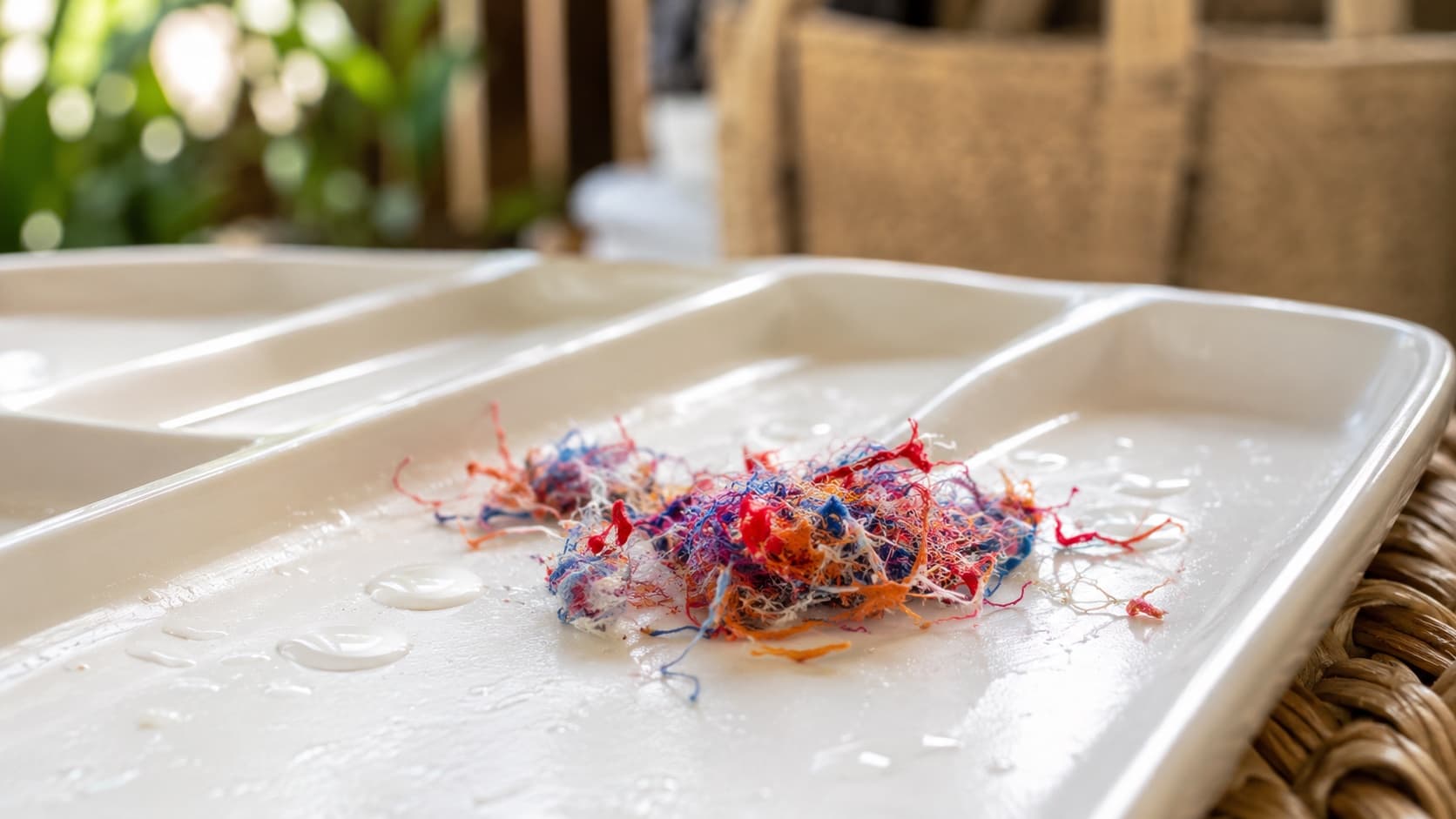
Every load of laundry sheds tiny plastic fibres from synthetic fabrics. A single wash of a fleece jacket can release half a million fibres into the wastewater. In countries with municipal treatment plants, most get filtered out. In Bali, where wastewater from washing machines often runs into the same canals that feed rice fields and beaches, the fibres mostly don't.
This guide covers what microplastics from laundry actually are, why Bali's water infrastructure makes this more direct than in other places, and the practical steps that reduce shedding without changing how you live. The aim is to reduce microplastic laundry impact at the source.
What Are Microplastics from Laundry?
Microplastics are plastic particles under 5mm. Microfibres are the laundry-specific version, shed every time a synthetic fabric is washed.
The main sources sit in your wardrobe already: polyester, nylon, acrylic, and polyamide. That covers most "performance" fabrics, most fast-fashion clothing, and a lot of activewear bought specifically for the tropics.
A single 6kg wash of synthetic clothing can release over 700,000 microfibres. The fibres are too small for the standard filters built into domestic washing machines, so they pass into the wastewater. From there, they enter waterways, then the food chain through fish and shellfish.
For more on detergent choice and what it does for fibre release, see our eco-friendly detergent guide.
Why It Matters in Bali Specifically
Bali's wastewater infrastructure is patchy outside the hotel zones. Many villa drains feed directly into soak pits, rivers, or rice-paddy irrigation systems. The water that leaves your villa's washing machine often doesn't go through any treatment at all.
The same canals carry runoff to the surf breaks at Echo, Berawa, and Pererenan. The pollution you see in the macro sense (single-use plastic on the beach after a rain) has an invisible companion. The microfibres don't wash up. They circulate.
Microplastics have been recorded in fish caught off Java's north coast and Bali's south. The plastic problem in Bali at the macro scale is well-documented. The micro scale is the compounding version that doesn't make it into the news.
Action at the laundry stage is one of the easiest places for individuals and businesses to intervene. For more on what we do across our shops, see our sustainability page.
What You Can Do at Home
The biggest wins at home don't require new gear. They're changes to routine.
- Skip the washes you don't need. Spot-clean activewear between sessions, air-hang items that don't smell, save full washes for when clothes are actually dirty.
- Lower spin speed. Higher RPM means more abrasion between fibres, which means more shedding.
- Cold wash. Hot water increases fibre release. Tropical Bali doesn't really need hot washes for most loads.
- Front-loaders shed less than top-loaders. Worth checking if you're picking a villa rental for a long stay.
- Buy natural fibres where you can. Cotton, linen, hemp, wool. They shed too, but not plastic.
For more on garment care in tropical conditions, see our eco-friendly garment care notes.
What a Laundry Service Can Do
The home wins matter, but a commercial laundry has tools a household machine doesn't.
- Larger commercial filters can capture more fibres than domestic machines can. The filter design and replacement cycle make a real difference.
- Wastewater treatment at scale through sediment traps and filtration is more economical for high-volume operations than for individual homes.
- Detergent choice matters. Eco-friendly formulations are typically gentler on fibres, which reduces the rate of shedding per wash.
- Drying method matters too. High-heat tumble drying breaks down fibres faster than line drying or lower-heat tumble drying.
For a wider view on what makes a Bali laundry actually eco-friendly, see our eco-friendly laundry guide.
How Easy Day Laundry Approaches This
We're honest about what's possible and what isn't. Filtration at our scale isn't a magic solution, but a series of small operational decisions add up.
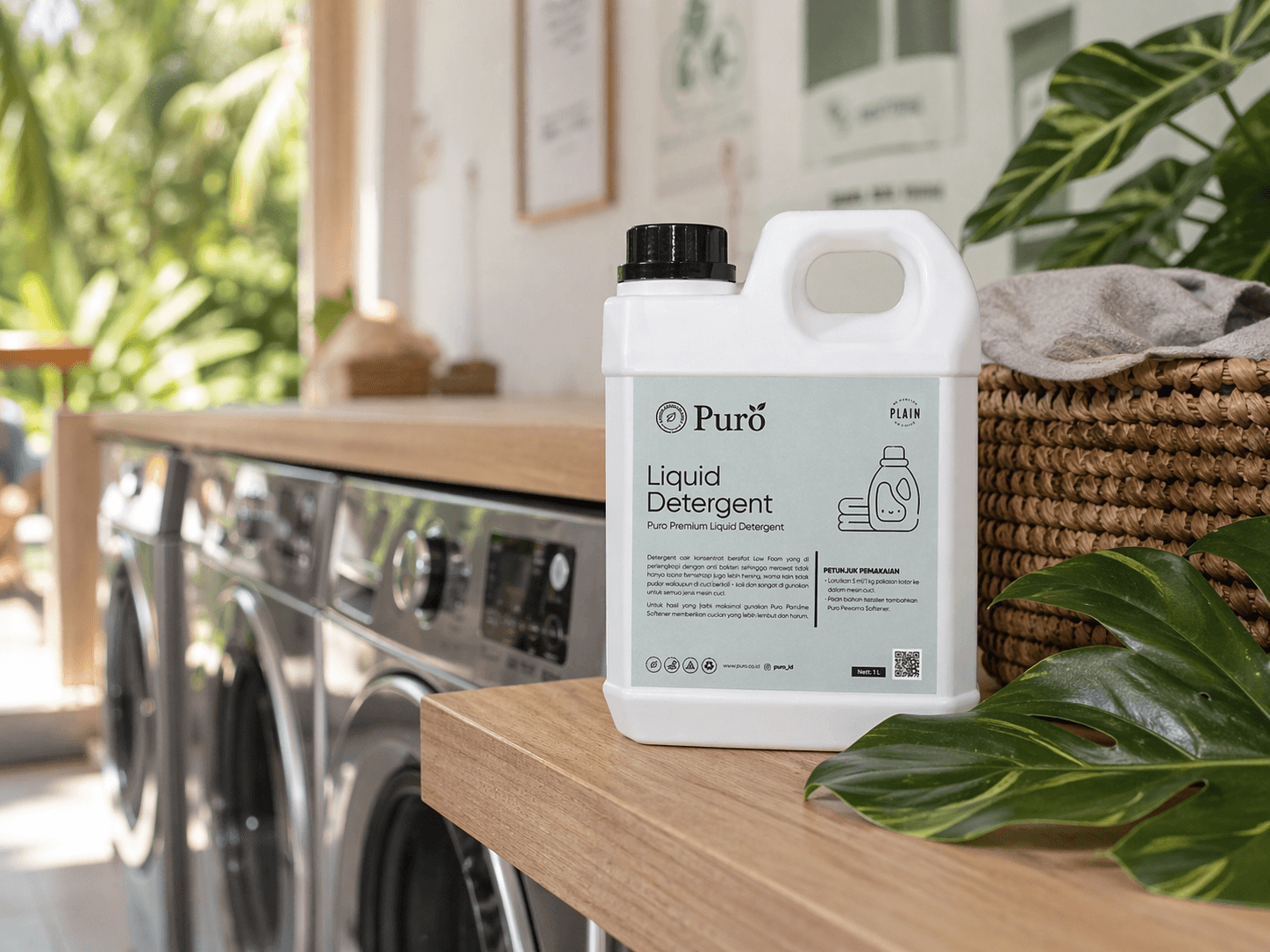
- PURO Premium Detergent and Softener, an eco-friendly and biodegradable formulation, across all five shops
- Sediment filters on our wastewater outlets
- Gas dryers run at controlled heat, not always at maximum
It isn't a perfect solution. We're honest about what we can and can't filter. The water that leaves our shop is cleaner than the water that leaves most laundries in Bali, but it isn't drinking water. We say this because over-claiming on sustainability is what got the Bali laundry market into the "eco" credibility problem it's in now.
For more on the broader detergent picture, see our eco-friendly detergent guide.
Small Choices, Compounding Effect
The individual changes look small. Across hundreds of loads per year, they add up.
- Every cold wash uses less energy and sheds fewer fibres.
- Every consolidated load (a full machine, not a half-load) reduces water and shedding per garment.
- For Bali residents with year-round tropical wear and frequent washes, this compounds across hundreds of cycles.
Choosing a laundry partner that filters is one decision. The rest is routine.
Book a Pickup
Want laundry handled with eco-friendly, biodegradable detergent and proper filtration? Book a pickup from your address in Canggu, Seminyak, or Pererenan.
Frequently Asked Questions
Fresh laundry, sorted in Bali
Pickup & delivery across Canggu, Seminyak, Pererenan, Tumbak Bayuh & Padonan. Standard wash, dry, iron & fold from Rp 40,000 for 0–3kg.
Book a Pickup