
Eco-Friendly Laundry in Bali: What to Look For | Easy Day Laundry
A laundry shop in Canggu has a chalkboard sign out front reading "ECO LAUNDRY, 100% NATURAL." Inside, you can smell the dryer sheets from the street and the wastewater runs into the gutter blue. "Eco-friendly" is the most overused word in Bali's laundry market, mostly because no one defines it.
If you're trying to find eco-friendly laundry in Bali that holds up to scrutiny, here's what actually matters. Five concrete things separate real practice from green branding. Each one is verifiable with a short conversation at the shop. The article also covers where the trade-offs are real: cost, drying time, and finish.
What Does "Eco-Friendly Laundry" Actually Mean?
There's no certification body for eco-friendly laundry in Indonesia. Any shop can claim the label without anyone checking. That makes the word nearly useless on its own.
In practice, eco-friendly laundry comes down to five things: detergent, water use, energy use, microplastic capture, and packaging. Each one has a measurable test. A shop scoring well on three or four is doing genuine work. A shop with green branding and no specifics on any of them is selling the colour, not the practice.
Beware of green-coloured branding without specifics. "Eco-friendly" written on a poster doesn't mean biodegradable detergent in the wash. The honest version is that most laundries are partially eco-friendly. The good ones are honest about what they do and what they don't. The Easy Day Laundry sustainability page lays out where we stand on each of these.
1. Detergent: Eco-Friendly vs Conventional
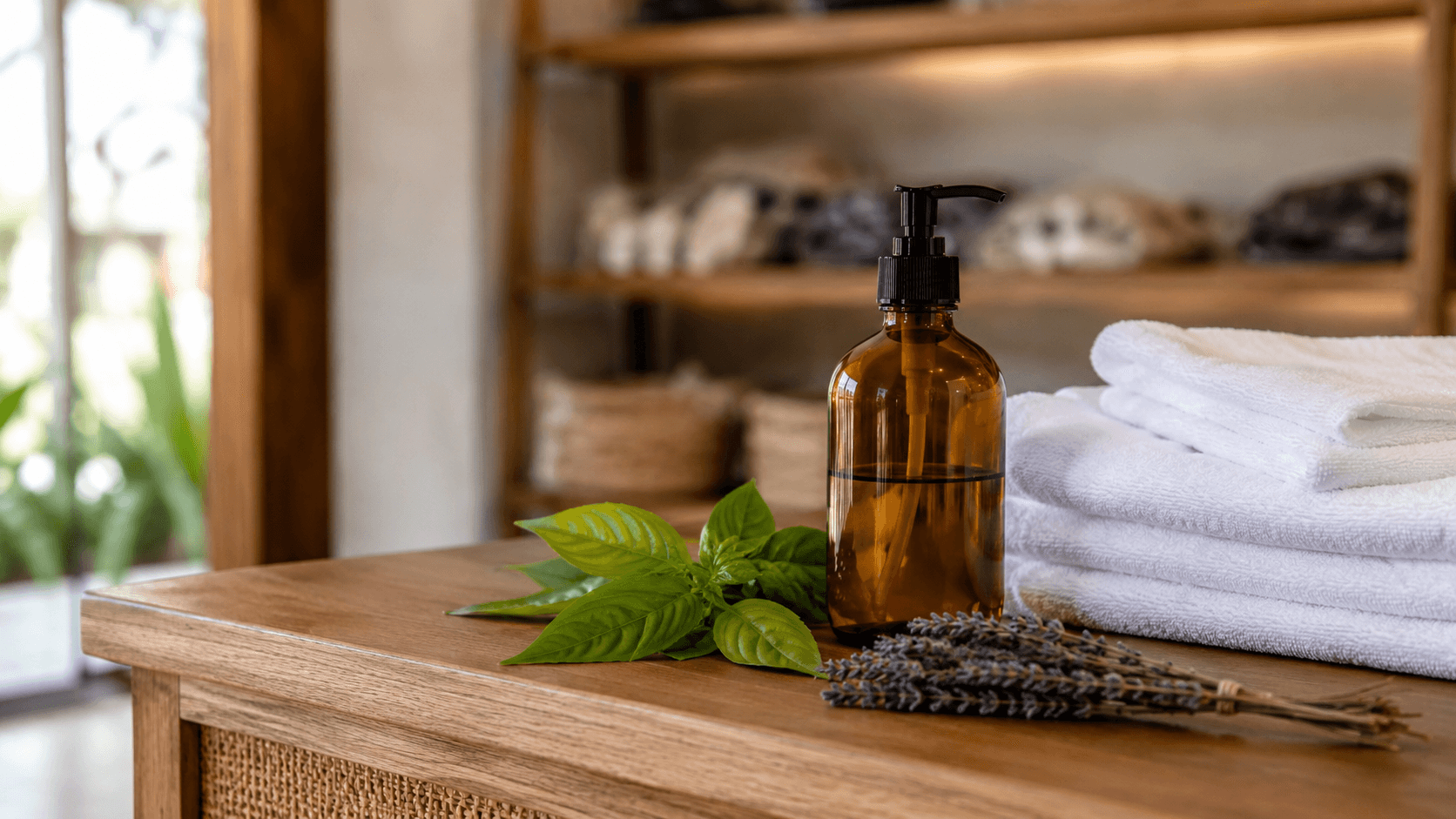
Eco-friendly detergent uses surfactants derived from coconut, corn, or palm oil. The breakdown in wastewater happens in days rather than months. The cleaning power matches conventional detergent for most everyday loads, with a slight gap on heavy industrial stains.
Conventional detergent often contains three problem ingredients: optical brighteners (added "whitening" that's chemical sleight of hand, not actual cleaning), phosphates (which feed algae blooms when they reach waterways), and synthetic fragrances (which trigger respiratory and skin reactions for some users).
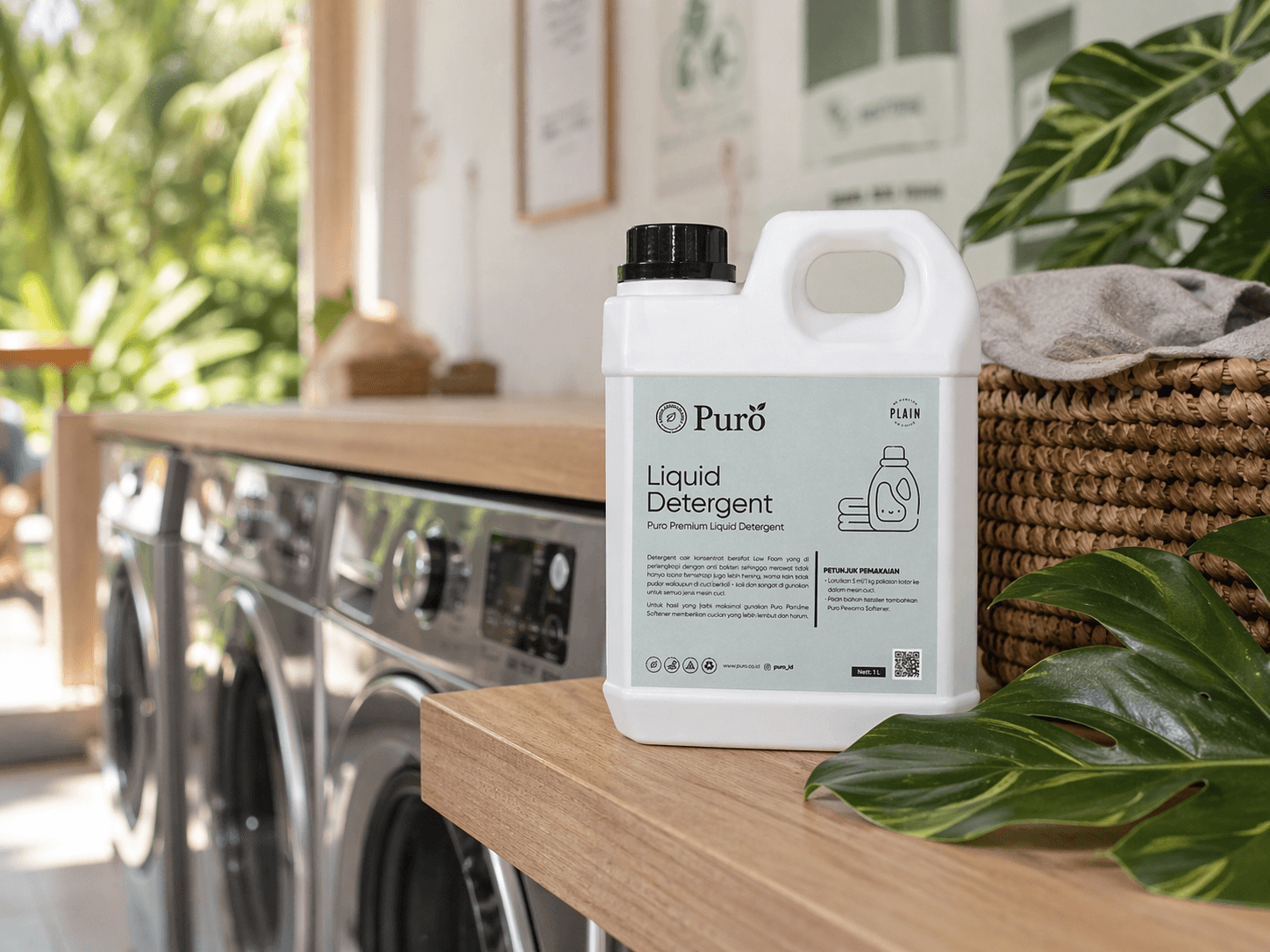
In Bali, where laundry wastewater often reaches rice fields and small rivers before any treatment, biodegradability matters more than it does in places with full municipal sewage processing. The water you wash with reaches farmland and ocean within a few kilometres of the shop. We use PURO Premium Detergent and Softener as standard, not as an upgrade tier. The full detergent story sits here.
2. Water Use and Wastewater
Commercial high-efficiency washing machines use 30 to 50 percent less water than residential ones. The savings come from front-loading drums, recycled rinse water, and accurate weight sensors that calibrate cycle volume to the load.
Bali's water table is under steady pressure. Dry-season borewells run shallower every year. Coastal aquifers in Canggu and Pererenan are taking saltwater intrusion from over-extraction. Water use isn't a far-away abstraction here. It's measured in the next dry season.
Three things to look for: front-loading machines (less water than top-loaders), wastewater drainage routed into proper sewage or treatment rather than open gutters, and reuse of rinse water for first washes on the next load. Ask the question directly. "Where does your wastewater go?" The answer separates the careful shops from the rest within ten seconds.
3. Energy: Drying Is Where It Adds Up
Drying uses three to five times the energy of washing in tropical climates. The wet weight of the clothes is the same, but pulling moisture out against 85 percent humidity takes more energy than pushing detergent through fibre.
Hybrid drying changes the math. Line-dry first to get the bulk of the moisture out using free solar energy, then machine-finish for the last 10 to 15 percent and the press-ready dryness. That sequence cuts dryer energy use by 40 to 60 percent with no quality loss. The garment comes out drier than line-drying alone and uses much less grid power than full machine drying.
All-machine drying is fastest but heaviest on the grid. All-line drying is the greenest option in dry season but unreliable from November to March, when an afternoon rainstorm can re-soak a full load. We line-dry where conditions allow and machine-finish for humidity-sensitive items like sheets and towels.
4. Microplastic Capture
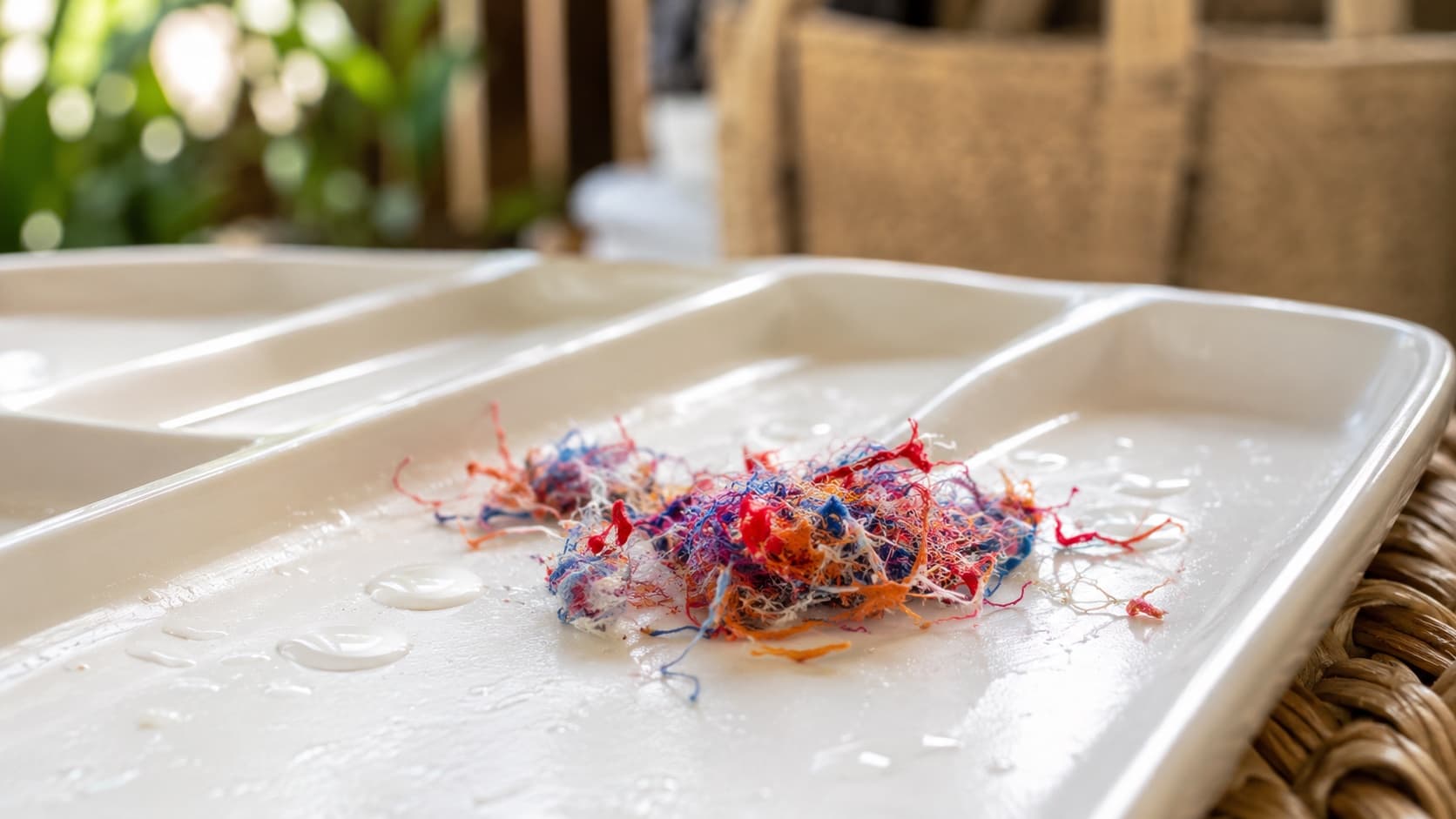
Synthetic fabrics shed microplastic fibres in every wash. A single average load can release several hundred thousand fibres. They're too small to see and too small for most filtration to catch.
Most Bali laundries have no microplastic capture in place. The fibres go straight from the washer drain to the wastewater system, then to waterways, then to ocean. The Bali coast and the reef systems off Nusa Penida are taking measurable microplastic load each year.
Capture methods exist but most are still niche in Indonesia. Cora Ball-style in-drum filters trap a portion of the fibres. Washing bags like Guppyfriend contain synthetic items within a fabric pouch that captures sheds. Commercial-grade lint capture systems on the drainage line catch more, but they cost real money and need regular cleaning. The bigger fix is upstream: wash synthetics less often, consolidate them into fewer loads, and run cooler shorter cycles. The garment care notes cover the household-level version of this.
5. Packaging and Returns
Single-use plastic laundry bags are everywhere in Bali. Almost zero of them get recycled. They go to landfill or to the ocean within a few months of returning a load. We use them at Easy Day Laundry too and won't pretend otherwise. Packaging is the slowest piece of the operation to change, and the area where the laundry industry across Bali (us included) has the most ground left to cover. We're working on a reusable-bag option for repeat customers as a first step.
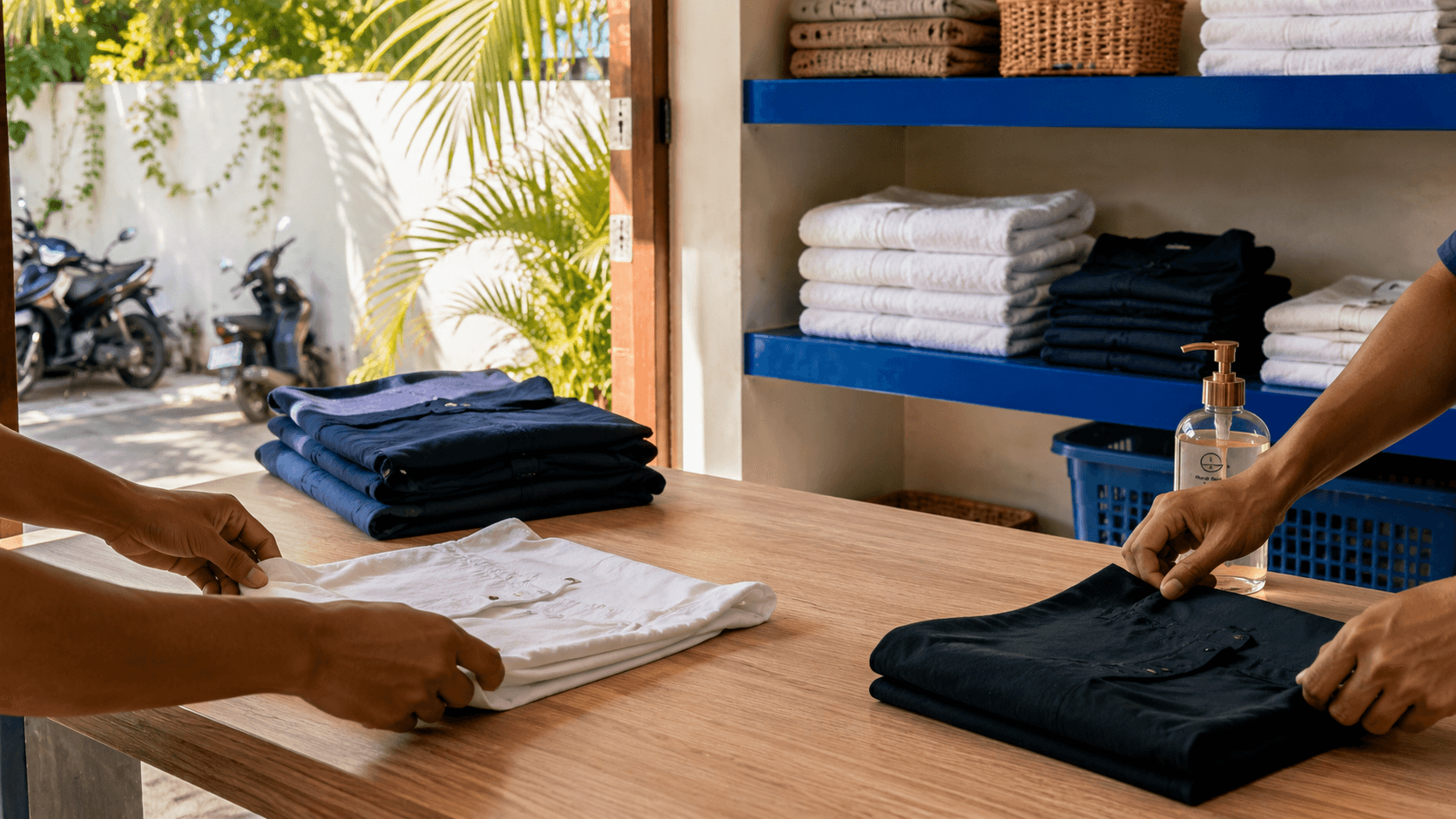
Reusable cloth or jute bags are a real upgrade where a shop uses them as standard. A single fabric tote returned with each delivery and washed back at the shop cuts hundreds of bags from your laundry life over a year of stays. Plastic-free returns also include the small things: hangers without plastic covers, no individual plastic wrapping around shirts, and recyclable paper tags rather than plastic-coated ones.
Watch for paper-coated plastic. It looks recyclable from across the room but isn't. The two materials can't separate at any local recycling facility, and the whole thing ends up as landfill.
How to Verify Eco Claims Before You Book
A short conversation tells you most of what you need to know. Four questions cover the main ground.
- "What detergent brand do you use and is it biodegradable?" A specific brand answer is a good signal. A vague gesture at "natural products" usually isn't.
- "Do you machine dry, line dry, or both?" A specific process answer means they think about it.
- "How is wastewater handled?" A defensive answer or "I don't know" is a warning.
- "What kind of bag does the laundry come back in?" The packaging answers itself with one returned load.
Look at the shop while you ask. Chemical smell at the door, branded conventional detergent visible on shelves, and stacks of single-use plastic bags all tell a different story than the chalkboard sign. Read the website if there is one. Generic green imagery without named products and specific practices is branding. Specifics are practice. For more on what to ask, see our laundry tips for Bali.
Does Eco-Friendly Laundry Cost More in Bali?
Eco-friendly, biodegradable detergent costs 20 to 40 percent more than conventional at the wholesale level. Most eco-laundries pass some of that on, though not all.
Easy Day Laundry pricing sits at standard market rates. Every service gets the same detergent. We absorb the difference rather than charging a green-tier markup. The Wash, Dry, Iron, Fold service page covers the full pricing structure.
Some specialist eco-laundries charge a 15 to 25 percent markup and call it a "green tier." That's worth paying if their other practices match the price (water-efficient machines, hybrid drying, reusable packaging, named detergent brand). The less-honest version is the laundries that charge a green markup without changing their actual practices. The verification questions above sort one from the other.
Want a laundry that uses eco-friendly, biodegradable detergent at standard rates and is honest about where it still has work to do? Book a pickup and we'll have it back inside 24 hours.
Frequently Asked Questions
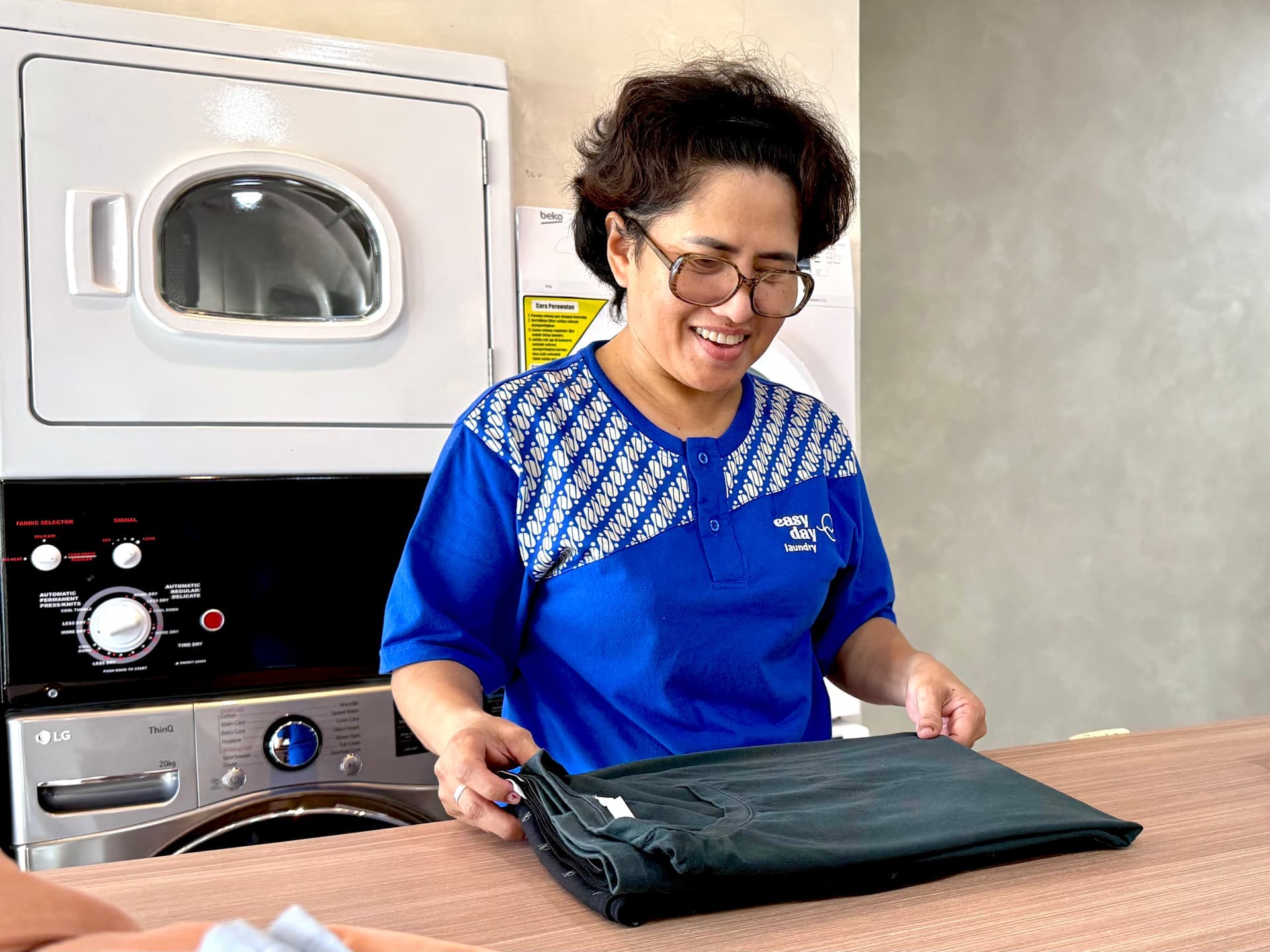
Fresh laundry, sorted in Bali
Pickup & delivery across Canggu, Seminyak, Pererenan, Tumbak Bayuh & Padonan. Standard wash, dry, iron & fold from Rp 40,000 for 0–3kg.
Book a Pickup